

Causes and Diagnosis of Pica
Pica can be caused by a number of things, such as dietary deficiencies, medical conditions, genetics, and stress.
Dietary Deficiencies: According to Pam Johnson-Bennett, some behavior experts and veterinarians believe that an inadequate amount of fiber or fat in a cat's diet can lead her to seek these nutrients from non-food items. Some cats with anemia have been known to eat their litter, for instance.
Medical Problems: According to WebMD, feline leukemia and feline immunodeficiency virus are associated with pica. Pica can also be triggered by a brain tumor or diabetes.
Genetic Predisposition: Some Oriental breeds, such as the Siamese and Burmese are genetically predisposed to wool sucking, which is sometimes a precursor to pica.

Stress: Some kitties try to soothe themselves by eating inedible things when they reside in a stressful environment.
If your kitty is eating non-food items, please take him to the veterinarian for an examination. Your veterinarian will be able to determine the cause of your cat's pica. Your veterinarian will also be able to help you treat a medical condition or make dietary adjustments, if necessary. If no medical problem or dietary deficiency is found, you and your vet can discuss what steps to take to help your cat cope with pica.
Coping with Pica
There are several things you can do to help a kitty who has pica.
Remove Temptation: If your cat likes chomping on sweaters, be sure to keep all of your clothes in closets, dressers, and hampers with lids. If your kitty likes to munch on paper, keep all papers in filing cabinets or file boxes so that your cat cannot access them. Keep whatever inedible item your cat likes to eat out of her reach.
If you cannot keep your cat's desired objects out of her reach, spray them with a taste deterrent, such as Bitter Apple or Veterinarian's Best Bitter Cherry Spray.
If you cannot keep your cat's desired objects out of her reach, spray them with a taste deterrent, such as Bitter Apple or Veterinarian's Best Bitter Cherry Spray.
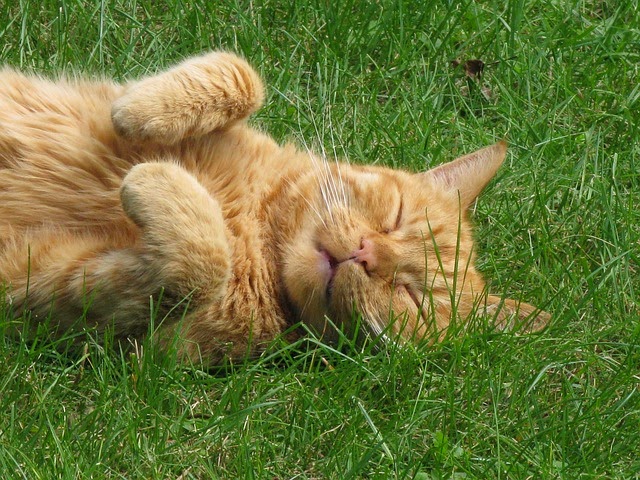
Provide Safe Alternatives: Many kitties enjoy eating cat grass. You can find cat grass kits at your local pet store that you can grow at home. Cat grass will provide your kitty with something to munch on that won't hurt him. Pam Johnson-Bennett reminds cat parents not to give their furry friends grass from the yard because it is often treated with harmful chemicals.
Environmental Enrichment: An indoor-only cat can become bored if she isn't given enough stimulation in her environment. Provide your companion with scratching posts, cat trees, toys, and puzzle feeders to keep her physically and mentally stimulated. Place a cat tree by a window so your kitty can watch bird and squirrel TV. Putting a bird feeder outside the window will attract birds for your cat to watch. Your cat might also enjoy watching fish swim around in a fish tank.
 Some kitties find cat DVDs entertaining. Milita loves watching Meerkat Manor, for instance. If you don't have a cat DVD, Netflix has some nature shows your cat might find entertaining. Milita really liked a nature show about birds I put on for her one day, for example.
Spend time with your cat in interactive play sessions twice a day. Not only do interactive play sessions decrease boredom, they help you build a stronger bond with your companion.
Reduce Stress: Determine what's causing your kitty stress. This might take a little detective work. Are there any loud noises in his environment? Are there any cats outside causing him stress? Have you made any recent changes to your home? Has your cat's routine changed recently? Any stressor, no matter how big or small, can affect your furry friend.
If you can, eliminate the source of your cat's stress. Of course, this won't always be possible. When it's not possible to eliminate the source of the stress, make your kitty's environment more secure by providing him with cozy spots to curl up and nap in, elevated places to watch the world from, and safe locations for his food and litter box.
Comfort Zone diffusers or calming collars are effective at reducing anxiety as well. I've used both the Comfort Zone diffusers and Sentry calming collars on Carmine and Milita, and they both help tremendously when stressful situations arise, such as when we moved and when we lost our precious Jewel.
 Attention Seeking: According to the ASPCA, some cats engage in compulsive behaviors to get attention. Don't give your cat any extra attention when she's eating things she shouldn't; otherwise, she may learn that chomping on paper gets you to pay more attention to her, which reinforces the behavior. Instead, if you see your kitty chewing or eating something she shouldn't, simply take it away from her.
Comfort Zone diffusers or calming collars are effective at reducing anxiety as well. I've used both the Comfort Zone diffusers and Sentry calming collars on Carmine and Milita, and they both help tremendously when stressful situations arise, such as when we moved and when we lost our precious Jewel.
Medication: In severe cases of pica where anxiety is the root cause of the problem, medication may be needed. Many veterinarians use psychotropic medication as a last resort due to possible side effects.
Reducing or stopping pica behavior may be difficult. If you've seen your vet, determined the cause of the behavior, and tried these solutions, and your cat is still eating inedible things, it may be time to consult a certified behavior specialist.
Have you ever had a cat who ate inedible items? How did you help him or her?
