Showing posts with label cat behavior. Show all posts

Friday, June 5, 2015

How to Relieve Cat Stress

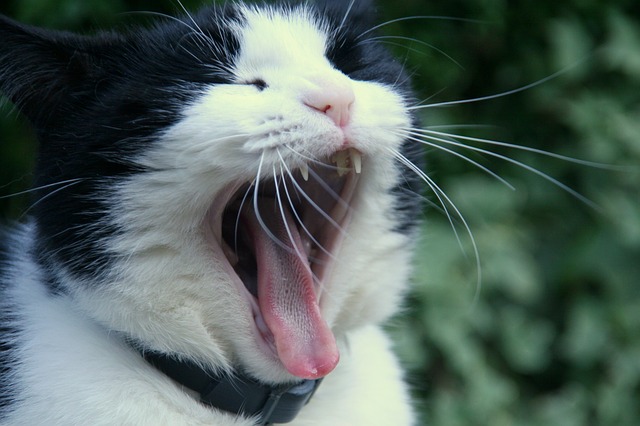
Black and white cat yawning
A couple of weeks ago, we discussed how to tell if your cat is stressed.  While it would be wonderful if we could simply remove the stressor from our cat's life, this isn't often possible.  If you believe your kitty is experiencing stress, you may want to try one or more of these stress-relieving strategies to help your kitty cope.

Play: Playing with your cat can help reduce her stress.  Engage your cat in 10-15 minute interactive play sessions twice a day to help her relax.  Many kitties enjoy fishing pole type toys.  Others may prefer to play fetch or chase after balls with bells in them.  The Humane Society of the United States suggests setting a few toys aside specifically for interactive play sessions with your cat.  Only use these toys when it's time for you and your kitty to play together.  

Between interactive play sessions, provide your companion with toys he can play with on his own.  Many kitties enjoy catnip toys.  Your cat might also like balls, toy mice, crinkle balls, and puzzle toys.  To keep your kitty from getting bored with his toys, rotate them every few days.  

Environmental Enrichment: One cause of stress in felines is boredom.  Providing your cat with an interesting and enriching environment can ward off boredom and stress.  Provide your kitty with sturdy scratching posts.  Ideally you want to give your cat a few scratching posts in different shapes and sizes.

Cat taking a nap while hugging a toyLots of cats enjoy looking out the window.  To make the experience more pleasurable for your kitty, buy her a window perch or put a comfortable bed by the window for her.  Placing a bird feeder outside the window will attract birds to entertain your kitty.  

Provide your companion with comfortable spots to nap.  Carmine and Milita can choose to nap in cat beds, cushy cubes, or on fleece blankets.  Of course, they are always welcome to steal my bed if they want, too.  As mentioned earlier, rotating your cat's toys every few days will help prevent boredom as well.  Cat DVDs, music, and puzzle toys are other great ways to enrich your feline's environment.  Give your cat something fun to do while you're away by hiding a few treats or toys around the house for her to find.  

Provide Enough Resources: If you live in a multicat household, it's essential to provide enough resources for every cat in the home.  A good rule of thumb is to provide one of each resource for each cat in the home plus one.  For instance, if you have three cats, you should have four litter boxes and feeding stations placed throughout your home.  I divide up Carmine and Milita's allotted amount of daily kibble into three separate bowls.  They have never fought over food, but having three separate feeding stations ensures that they can both eat at the same time, and there is never any competition over the food bowl.  

Cats need to feel safe and secure in their homes as well.  That's why it's important to provide cats, especially those in a multicat household, with numerous hiding spots, resting places, and high spots.  Boxes, cat cubes, condos, trees, closets, and cat carriers are all great places for kitties to hide.  Bookshelves, desks, cat trees, and shelves make good safe high places for cats to hang out.  Providing your cats with plenty of choices reduces the likelihood that your kitties will fight over hiding places and high spots and helps ensure all of your cats feel safe and secure.  

If tension exists in your multicat home, you may need to reintroduce your cats or employ the advice of a cat behavior expert.  Tackle multicat tension early whenever possible.

Greay cat laying outside

Calming Aids: Another thing you can try is a calming aid.  Calming aids include collars, sprays, and plug-ins that use or mimic feline pheromones to give your cat a sense of well-being.  We have had good results with Comfort Zone (Feliway) plug-ins and Sentry calming collars.  These calming aids have been especially helpful to Carmine and Milita during moves and after Jewel's passing.  

Stick to a Routine: Cats are creatures of habit and do not like change.  Sticking to a routine is one of the best ways to prevent your cat from experiencing stress.  When you know you will need to change your kitty's routine, do so gradually whenever possible.  For instance, if you need to change your kitty's dinnertime, do so by gradually moving her dinnertime forward or backward.  Likewise, if you are expecting a baby, gradually get your cat used to the sights, sounds, and smell of a newborn before your due date.  

If you are expecting a short-term change that will interrupt your companion's regular routine, return to the old routine as soon as possible.  For example, if you go on vacation, resume your cat's regular routine as soon as your return home.  

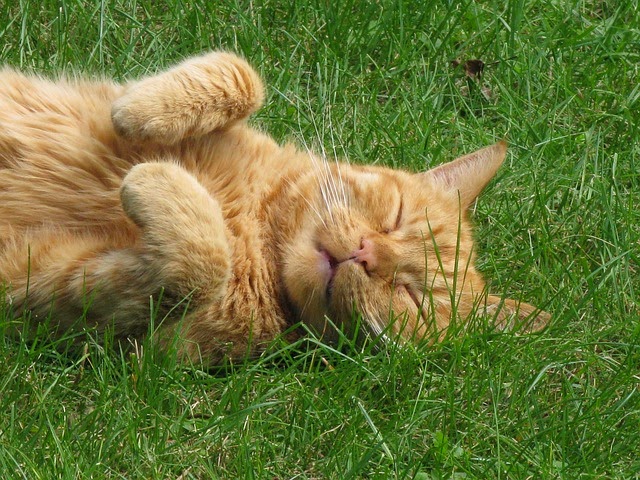
Orange cat laying in the grass
Natural Remedies:  Some herbs are also useful for reducing stress in cats.  Remember that it is always best to consult your veterinarian before beginning any type of treatment, including using herbs to treat cat stress.


  • Catnip: You're probably wondering why catnip is being suggested for cat stress when it tends to rile kitties up.  PetMD suggests giving catnip approximately 15 minutes before you know a stressor will occur, such as a trip to the vet.  After your cat runs around at high speed for a few minutes, he will become tired and calm.
  • Chamomile: Chamomile acts as an anti-anxiety agent for cats.  PetMD recommends putting the dried flowers into a tube collar or making a little pouch with the dried flowers inside so that your cat doesn't eat it.
  • Valerian: Valerian is said to act like catnip with one difference.  After your kitty's initial craziness, valerian is more likely to make your cat sleep.  Some humans use valerian for insomnia as well.
  • Bach Rescue Remedy: Rescue Remedy is know to calm anxiety in cats and dogs as well as in humans.  Perhaps the greatest benefit of Rescue Remedy is that it works immediately, so it is a good choice when you need to calm your kitty right away.  Please ensure that you give your cat the Rescue Remedy formula that does not contain alcohol.  
It would be great if we could remove all of our feline's stress triggers.  Unfortunately, that's not usually possible.  If you believe your cat is stressed out, I hope you'll try some of these strategies to help relieve your kitty's stress.  

How do you relieve your cat's stress?

Sources:


Friday, May 22, 2015

Do You Have a Stressed Cat?: Recognizing the Signs of Feline Stress


As humans, we face stressful situations everyday, whether it's with our finances, an appliance breaking in our homes, a disagreement with someone we care about, illness or injury, or problems at work.  Sometimes we get so wrapped up in trying to sort out our own problems that we don't recognize that stress is also affecting our furry companions.  Stress can lead to stress-related illnesses, make certain health conditions worse, lead to undesirable behaviors, and reduce a cat's quality of life.  Thus, it's important for us, as pet owners, to be able to recognize the signs of stress in our companions so that we can address it efficiently and effectively.

Causes of Cat Stress

Any change, big or small, in a cat's environment or body can cause her stress.  As with humans, some kitties are more sensitive to stress than others.  More sensitive cats may be affected by very small stress triggers while a less sensitive cat may only be affected by major stress triggers.  Your cat may be affected by physical, environmental, or emotional stress.  
  • Physical: When your cat experiences changes or trauma to his body, he is dealing with physical stress.  Physical stressors include surgical procedures, physical abuse, neglect, starvation, injury, illness, obesity, and having fleas or ticks.
  • Emotional: Changes that affect a kitty's psychological state can also be stressful.  Lack of mental stimulation (boredom), death of an animal companion or human living within the home, the addition of a companion or human to the home, and the prolonged absence of a pet or human are all examples of psychological stressors.  

  • Environmental: Environmental stress occurs when a cat is faced with a change in his surroundings.  A change in litter or food brand, having only one feeding station or litter box in a multi-cat household, visitors, loud music, home renovations, seeing another cat in his territory, hearing a barking dog, and natural disasters are examples of environmental stress.  Cats may also be stressed by moving, going to the veterinarian, new furniture, rearranging existing furniture, and being denied access to hiding places.  
Symptoms of Stress

The symptoms of stress you observe in your cat will depend on whether your cat is experiencing acute or chronic stress.  

Acute Stress: Acute stress occurs when an unexpected (short-term) change or threat occurs.  It is usually pretty easy to tell if your kitty is experiencing acute stress.  

Signs that your companion is experiencing acute stress include:

  • Immobility.
  • Being crouched down on all fours with the tail close to the body.
  • Shaking.
  • Fully dilated pupils, ears flattened against the head, and whiskers back.
  • Hissing or growling.
  • May be aggressive if approached. 
  • Involuntary defecation or urination.

Chronic stress can be more difficult to identify.  Chronic stress occurs when a kitty faces a long-term threat or challenge.  The signs of chronic stress are often more subtle and behavioral in nature.  

Signs that your cat is experiencing chronic stress include:

  • Excessive grooming, which may result in psychogenic alopecia, or undergrooming, which may result in dirty or matted fur.
  • Changes in appetite.
  • Increased sleepiness. 
  • Urinating or defecating outside the litter box.
  • Less interaction with family members or increased attention-seeking behavior.  Clingy behavior. 
  • Changes in relationships with the other companion animals in the home.
  • Hiding.
  • Excessive vocalization.
  • Aggression.

Remember that cats are unique, and the way your cat shows stress may be different than the way another cat exhibits stress.  

If you notice any of these symptoms in your cat, please take her to your veterinarian for a thorough physical examination to rule out medical problems.  If no medical cause can be found, your cat may be experiencing stress.  Please join us next Friday as we explore ways to reduce and relieve your cat's stress.

How can you tell when your cat is stressed?

Sources:


Friday, January 30, 2015

Pica: When Your cat Feasts on Fabric

It's thought that some kittens engage in wool sucking when they are weaned too soon or too abruptly.  Some kitties grow out of this behavior while others engage in wool sucking for life.  Wool sucking isn't usually dangerous unless the behavior progresses into pica - the eating of non-food items.  According to Pam Johnson-Bennett, while wool is the most common material associated with pica, cats with this condition may also eat plastic, paper, rubber, wood, leather, litter, and just about anything else.  Unlike wool sucking, pica can become very dangerous by causing intestinal blockages or obstructions.

Causes and Diagnosis of Pica

Pica can be caused by a number of things, such as dietary deficiencies, medical conditions, genetics, and stress.

Dietary Deficiencies: According to Pam Johnson-Bennett, some behavior experts and veterinarians believe that an inadequate amount of fiber or fat in a cat's diet can lead her to seek these nutrients from non-food items.  Some cats with anemia have been known to eat their litter, for instance. 

Medical Problems: According to WebMD, feline leukemia and feline immunodeficiency virus are associated with pica.  Pica can also be triggered by a brain tumor or diabetes. 

Genetic Predisposition: Some Oriental breeds, such as the Siamese and Burmese are genetically predisposed to wool sucking, which is sometimes a precursor to pica.

Boredom: Cats who aren't getting enough physical or mental stimulation living indoors may eat inedible items for something to do.

Stress: Some kitties try to soothe themselves by eating inedible things when they reside in a stressful environment.

If your kitty is eating non-food items, please take him to the veterinarian for an examination.  Your veterinarian will be able to determine the cause of your cat's pica.  Your veterinarian will also be able to help you treat a medical condition or make dietary adjustments, if necessary.  If no medical problem or dietary deficiency is found, you and your vet can discuss what steps to take to help your cat cope with pica.

Coping with Pica

There are several things you can do to help a kitty who has pica.  

Remove Temptation: If your cat likes chomping on sweaters, be sure to keep all of your clothes in closets, dressers, and hampers with lids.  If your kitty likes to munch on paper, keep all papers in filing cabinets or file boxes so that your cat cannot access them.  Keep whatever inedible item your cat likes to eat out of her reach.

If you cannot keep your cat's desired objects out of her reach, spray them with a taste deterrent, such as Bitter Apple or Veterinarian's Best Bitter Cherry Spray. 


Provide Safe Alternatives: Many kitties enjoy eating cat grass.  You can find cat grass kits at your local pet store that you can grow at home.  Cat grass will provide your kitty with something to munch on that won't hurt him.  Pam Johnson-Bennett reminds cat parents not to give their furry friends grass from the yard because it is often treated with harmful chemicals.  

Environmental Enrichment: An indoor-only cat can become bored if she isn't given enough stimulation in her environment.  Provide your companion with scratching posts, cat trees, toys, and puzzle feeders to keep her physically and mentally stimulated.  Place a cat tree by a window so your kitty can watch bird and squirrel TV.  Putting a bird feeder outside the window will attract birds for your cat to watch.  Your cat might also enjoy watching fish swim around in a fish tank. 

Some kitties find cat DVDs entertaining.  Milita loves watching Meerkat Manor, for instance.  If you don't have a cat DVD, Netflix has some nature shows your cat might find entertaining.  Milita really liked a nature show about birds I put on for her one day, for example.

Spend time with your cat in interactive play sessions twice a day.  Not only do interactive play sessions decrease boredom, they help you build a stronger bond with your companion.  

Reduce Stress: Determine what's causing your kitty stress.  This might take a little detective work.  Are there any loud noises in his environment?  Are there any cats outside causing him stress?  Have you made any recent changes to your home?  Has your cat's routine changed recently?  Any stressor, no matter how big or small, can affect your furry friend.  

If you can, eliminate the source of your cat's stress.  Of course, this won't always be possible.  When it's not possible to eliminate the source of the stress, make your kitty's environment more secure by providing him with cozy spots to curl up and nap in, elevated places to watch the world from, and safe locations for his food and litter box.

Comfort Zone diffusers or calming collars are effective at reducing anxiety as well.  I've used both the Comfort Zone diffusers and Sentry calming collars on Carmine and Milita, and they both help tremendously when stressful situations arise, such as when we moved and when we lost our precious Jewel.

Attention Seeking: According to the ASPCA, some cats engage in compulsive behaviors to get attention.  Don't give your cat any extra attention when she's eating things she shouldn't; otherwise, she may learn that chomping on paper gets you to pay more attention to her, which reinforces the behavior.  Instead, if you see your kitty chewing or eating something she shouldn't, simply take it away from her.  

Medication: In severe cases of pica where anxiety is the root cause of the problem, medication may be needed.  Many veterinarians use psychotropic medication as a last resort due to possible side effects.

Reducing or stopping pica behavior may be difficult.  If you've seen your vet, determined the cause of the behavior, and tried these solutions, and your cat is still eating inedible things, it may be time to consult a certified behavior specialist.

Have you ever had a cat who ate inedible items?  How did you help him or her?

Friday, December 19, 2014

Think Like a Cat: Book Review

Winter's the perfect time to snuggle up under a fleece blanket with a book and your favorite hot beverage.  Why not read something that will help you understand your feline companion better?

Think Like a Cat: How to Raise a Well-Adjusted Cat - Not a Sour Puss by Pam Johnson-Bennett will help you understand why your cat does what she does as well as give you proven behavior modification techniques to change unwanted behaviors.  Whether you're having trouble getting your cat to use the litter box, need advice on what to feed your kitty, or want to learn how to make traveling with your cat easier, you can find helpful suggestions in this book.

I love that each chapter of this book attacks a different subject or behavioral challenge.  Cat anatomy, choosing the right kitten (or cat) for you, how to conduct proper play sessions and how they can be used for behavior modification, litter box issues, scratching posts, traveling with your cat, addressing relationship issues between your cat and other cats, dogs, and humans in the household, and handling cat emergencies and first aid are covered in this comprehensive book.  Johnson-Bennett highlights important information throughout the book with charts and Cat Wise Clues.  I also like that Think Like a Cat includes a medical appendix in the back of the book.

Whether you're a brand new cat owner or a seasoned one, I believe everyone will learn something from this book.  It is an excellent reference for every human owned by a kitty.  I highly recommend this book to every cat owner.

About the Author: Pam Johnson-Bennett is a Certified Cat Behavior Consultant and best-selling author of seven books.  She also stars in the International series, Psycho Kitty, which airs on Animal Planet in the UK and on Nat Geo Wild in Canada.  She began making house calls to work with clients with cat behavior issues in 1982, and her first book hit the shelves in 1990.

Pam Johnson-Bennett served as VP of the International Association of Animal Behavior Consultants (IAABC).  She also founded the IAABC's Cat Division and served as its chair for eight years.  Additionally, she has worked with the Winn Feline Foundation and served on American Humane Association's Advisory Board on Animal Behavior and Training.

Currently, she works with the American Humane Association as a member of the Cat Health and Welfare Forum.  She also participates on the Advisory Board for Tree House Humane Society.

You can learn about Pam Johnson-Bennett on her website, and you can follow her via Twitter and Facebook.

Disclosure: I received a copy of Think Like a Cat: How to Raise a Well-Adjusted Cat - Not a Sour Puss free of charge to review.  This did not change my opinions in any way.  All thoughts and opinions expressed are 100% my own.

Friday, August 8, 2014

Preparing Your Cat for a New Baby

Bringing home a new baby is exciting for you, but it can be quite confusing for your kitty.  That's why it's important to not only prepare yourself and your home for your new baby, it's important to prepare your cat for the new arrival as well. 

Photo credit: Brad Brundage

Keep a Schedule: Cats are creatures of habit and don't like change.  Create a schedule before the baby comes that you'll be able to keep.  Gradually move your cat's feedings, playtime, and cuddles to the new schedule so he will be accustomed to it by the time you bring home your new baby.  Don't give your kitty a lot of extra attention before the birth of the baby.  Instead, gradually give your cat less attention outside of his scheduled play and cuddle time so he won't feel ignored when you're busy taking care of the baby.

Getting Kitties Used to Baby Sounds: You can help your kitty adjust to all the strange sounds that will inevitably come into the home with a new baby.  Purchase a CD of a baby crying.  Begin by playing the CD at a very low volume while your cat enjoys mealtime or engages in interactive play with you.  You want to ensure that your kitty associates a baby's cry with positive experiences.  Gradually raise the volume of the CD over several days or weeks until you have reached a realistic volume.  Be sure to go at your cat's pace; don't increase the volume of the crying baby until she is comfortable.  

Photo credit: Daniel Guumaraes

Baby toys and equipment also make noises your cat won't be used to.  If at all possible, buy and set up baby equipment well ahead of time.  Turn on the baby swing, and reward your cat if she decides to get near it.  Likewise, get out new baby toys, turn them on, and allow your cat to check them out.  Reward her for approaching or getting near them.  Never force your kitty to get near baby toys or equipment.  Remember, you want your cat to have positive experiences around the baby's things.

Helping Your Cat Adjust to New Smells: Use baby powder, baby oil, baby shampoo, and baby lotion on yourself so your cat can begin to get used to these new scents.  

The Baby's Room: Decide whether your cat will be allowed in the baby's room well before the arrival of the infant.  

If the Room Will be Off-Limits: Take any furniture your cat loves out of the baby's room so that he can continue to have access to it.  Put a cat tree or bed just outside the baby's room.  Install a tall baby gate in the doorway to get your kitty used to being restricted from the room.  Aytime you go into the baby's room, put a couple of treats on your cat's tree or in his bed.  

Once the baby comes home, give your kitty treats when you're feeding or rocking the baby in its room.  This will help your kitty associate the baby with something positive while rewarding him for staying out of the room.  

If your cat sneaks into the baby's room, gently put him outside the door.  Do not scold or punish him.

Photo credit: Trevor Leyenhorst

If the Baby's Room Will Not be Off-Limits: Put a cat tree or bed inside the baby's room.  Aytime you enter the baby's room, reward your cat with treats in her bed or on her tree.  After the baby arrives, give your cat treats in her bed or on her tree when you are feeding or rocking the baby to reward her for being near the baby.  

To train kitty not to jump into the crib, place some soda cans filled with pennies on the crib's rim.  If your cat tries to jump into the crib, the noisy soda cans should deter her.  Alternatively, you can use a crib tent to keep your kitty out of the crib.

When Baby Arrives: Be calm when you introduce your cat to the baby.  Talk to him in a soothing tone.  Reward him for getting near or approaching the baby and for positive interactions with the infant. 

Cats can happily coexist with new babies.  These tips should help your cat adjust to the arrival of a new family member.  

Have you ever introduced a cat to a new baby?  What tips can you share with expecting parents?

Friday, July 11, 2014

Separation Anxiety in Cats

Separation anxiety occurs when a pet doesn't like being separated from its owner or another companion pet.  Though it is more common in dogs, cats can suffer from separation anxiety as well.  

Signs of Separation Anxiety in Cats

Separation anxiety is typically more difficult to detect in felines than it is in dogs.  Some signs your cat may be suffering from separation anxiety include:

  • Excessive self-grooming.  If your cat is over-grooming, he or she may have bald spots on his or her body.
  • Vomiting - solely when you are away.
  • Vocalization when you leave.  You can check for vocalization in your abscence by recording your cat.
  • Inappropriate elimination.  Your kitty may urinate or defecate near the door or on your personal belongings in your absence.  
  • Destructive behaviors.  Though rare for cats to exhibit, your kitty may chew on or scratch door edges.  It's hypothesized that they do this in order to escape from solitary confinement.  
  • Over-attachment to you.  Your feline may follow you from one room to another while you're at home.
  • Anorexia.  Your cat may be too anxious or stressed to eat in your absence.
  • Exhibits an exuberant greeting upon your return.
Causes

The exact cause of separation anxiety isn't yet known.  However, researchers speculate that both genetic and environmental factors are involved.  It's believed that being weaned too early or being orphaned could put a kitten at risk for developing separation anxiety.


Treatment

If your cat is exhibiting any of the symptoms described above, it's important that you take him or her to a veterinarian for a physical examination to rule out any underlying medical conditions.  If your vet gives your kitty a clean bill of health, there are several things you can do to treat separation anxiety.  

Some things that may help reduce your kitty's anxiety are:
  • Ignoring your cat 15 minutes before you leave home and for 15 minutes upon your return.
  • Providing distracting toys.
  • Giving your feline toys he or she especially loves before you leave and taking them away when you're home.
  • Providing a window perch or cat tree or tower in front of a window for your cat's entertainment.  Place a bird feeder outside the window so your cat has bird TV to watch while you're away.
  • Soft music or television may help your kitty feel less anxious while you're away as well.
  • Some felines enjoy "cat TV" - videos of birds, squirrels, etc.
  • Putting kibble or treats into food toys may also be entertaining in your absence.
If these suggestions don't work for your kitty, it may be wise to talk with your vet about getting a referral to a vet behaviorist specialist who can help you find ways to reduce your cat's anxiety.  In severe cases, anti-anxiety medication may be considered.

Have you ever had a cat with separation anxiety?  What helped him or her cope?